While driving along Highway 17 on your way to the wind-sculpted Great Sand Dunes, the Sangre de Cristo mountain range keeps you company, running with you across the horizon. While from afar the dunes look dwarfed by these mountains, as you enter the park, the dunes are a looming presence. Dig your toes into the sand or feel it run through your fingers, and you'll realize the true enormity of them. Make sure to see them in the late afternoon, when the setting sun makes shadows snake through the ridges of the dunes like black and motionless rivers.
Playing in the Sand
During winter, snow patches dot the dunes and add depth to its already unique façade. After heavy snowfalls, skiing, snowboarding, sledding and snowshoeing on the dunes are common activities. In warmer months, hike the dunes, and let your feet sink in the warm, soft sand. Or, for out-of-the-ordinary fun, bring a pair of skis or a snowboard and hit the sand dune slopes. It’s like a Colorado ski slope, minus the snow and high-speed lifts.
An Ocean of Sand In the Rocky Mountains? How the Dunes Came to Be
The question often arises, how did this improbable sandbox find itself perched more that 8,000 feet above sea level? The answer is, truly, blowing in the wind.
A deep and ancient sea once covered the landscape of this area, and the great dunes are the collected remnants of the seabed’s sediment. Today, the tributary-fed valley floor acts as a gathering place for the sedimentary deposits. The strong winds that blow easterly, towards the Sange de Cristos, lift the century-old sediment and pile it up at the base of the mountains. Within a bend in the range, sand settles and builds upon itself millions of times over, creating the dunes.
The same winds then mold and sculpt the sand, giving the dunes their unique angles and lines, and creating the more than 750-foot high mountains of sand we see today. And the dunes are still constantly changing. From year to year, the dunes’ peaks may dissolve in one area and be rebuilt in another. In fact, people who have returned after their first visit come to find that the pathways they once took through the dunes no longer exist. While there is perpetual change, the dunes still remain rather constant in size. This constant shuffling of the sand—but lack of actual growth—is the result of competing westerly winds that remove what the eastern winds add.
Wildlife Within the Park:
The Great Sand Dunes National Park and Preserve and its surrounding area teem with wildlife. Animals you may see include pronghorn antelope, bison, mule deer, fox and elk. In fact, it's not uncommon to have an up-close wildlife experience just outside your tent. Of course some animals you may wish to view from a safer distance: mountain lions, black bears, and coyotes also reside near the dunes.
Other Park Notables
The dunes themselves are giants, but they are still dwarfed by the surrounding craggy peaks of the Sangre de Cristos. Crestone Needle and Crestone Peak, both 14ers (peaks that are higher that 14,000 feet), as well as Cleveland Peak and Mount Herard (at more than 13,000 feet) add a magnificent backdrop to this incredible landscape.
The Medano Pass four-wheel-drive trail is also offered to intrepid and well-equipped off-road adventurers. This trail leads you from the national park to the town of Gardner, roughly 25 miles away. It’s an extensive and unimproved path that takes you from the sandy dunes up through breathtaking groves of aspen and pinyon trees, and over pristine high-altitude tundra. It’s a trip that truly showcases the amazing variety of nature in Colorado.
With so much to see and do within the park, it’s not uncommon to stay for a few days. And with more than 88 car-camping sites, and tent sites spread out over 33,000-plus acres, the park gives you ample opportunities to sleep under the stars.
Good to Know:
- Park Hours: The park is open 24 hours a day, 365 days a year. The Visitor Center is open from 9 am to 4:30 pm in the winter months, and
9 am to 5 pm the rest of the year.
- Fees: Adult day passes are $3. Camping fees are $14 a night, in addition to the cost of the day pass.
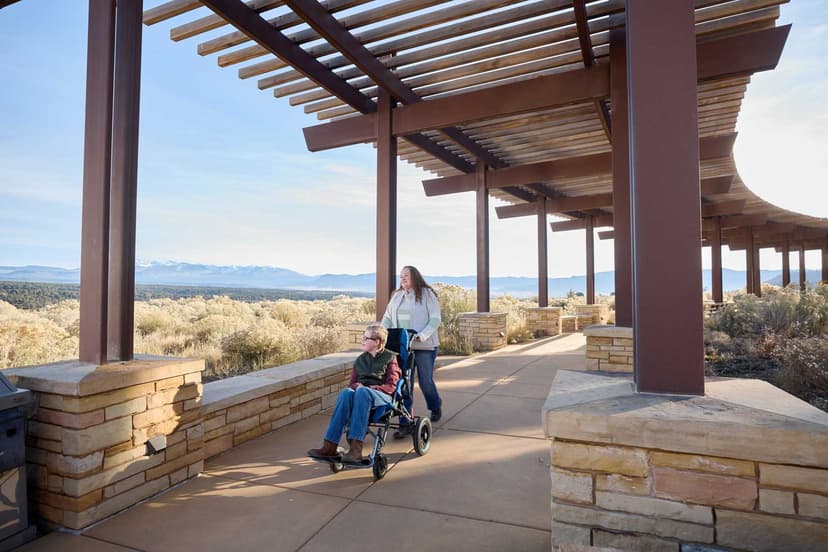
- Accessibility: The national park offers specially designed wheelchairs for those wishing to access the dunes. Oversized rubber tires allow the wheelchair to roll over the dips and rises of the dunes. Another person, however, is required to push the wheelchair through the dunes.
updated: 04/05/06