Georgetown Loop Railroad
Hotel De Paris
Hamill House
Energy Museum
Laden with silver deposits, the Georgetown and Silver Plume area quickly became known for its ability to make people wealthy. And while the precious mineral in the hills remains, its great value has diminished. However, the area is still rich with one thing: history.
Both towns are wonderfully preserved Victorian communities. Exploring their quiet lanes reveals a townscape that has withstood the passage of time, thanks to caring citizens and the work of dedicated preservationists. Be it a legendary railroad, a Victorian hotel, an immaculate 1870s house or a museum devoted to hydroelectric power, the Georgetown-Silver Plume National Historic Landmark Districts invite you to step into the past.
Top of page
Georgetown Loop Railroad
Established as an incorporated town in 1868, Georgetown was a miner’s camp that had a distinct geographical problem—it was rich in mineral deposits, but freight options for getting the massive amounts of ore out of the Rockies were limited. That is, until 1877, when railroad magnate Jay Gould brought the Colorado Central Railroad to the area. With the extension of the line connecting Georgetown and Silver Plume, the fortunes in the mines could more easily be transported to Denver’s smelters. The new rail line also strengthened the local economy by turning Georgetown into a service community for surrounding mining camps. A great engineering feat by any measure, the Georgetown Loop Railroad now powers you through a forested gorge and silver mining lore. In one section, a high bridge spans 93 feet above Clear Creek. The line also offers vistas of the Rocky Mountains that provide postcard-worthy shots even for the novice photographer. Owned by the Colorado Historical Society, the railroad runs daily between Memorial Day and the end of September, and gives you the chance to ride the track and trestles it has traversed for so long.
When you take the train ride, you are given the option of exploring the Lebanon Silver Mine. Don a hardhat and take a guided tour through 500 feet of one of Colorado’s legendary mines. The temperatures in the mine can get cool, so bring a light jacket.
Top of page
Hotel De Paris
The story of the Hotel De Paris is one wrapped in heroism and fantastic stewardship. In the late 1800s, the French-born Louis Dupuy set up residence in Georgetown and took on the laborious profession of being a miner. In 1873, he was injured in a mine blast while pushing his coworker out of harm's way. With injuries ending his short career as a miner, he looked to other avenues. The people of Georgetown—informed of his heroic actions of self-sacrifice—took up a collection to help him start a new business. Dupuy did just that, by purchasing a bakery and transforming it into the Hotel De Paris in 1875. Since that time, the hotel has hosted thousands of travelers and now sits as a tribute to the hard work and diligence of a French-American entrepreneur.
Top of page
The Hamill House
The centerpiece of Georgetown’s historic district is the charming Hamill House. As a meticulously preserved example of late-1800s residential living, the house offers an extraordinary opportunity to see the architectural styles, furnishings and landscaping techniques of the day. As part of an expansion to the house in 1879, a magnificent conservatory was added. Step inside the spacious greenhouse and witness the splendor of the indoor garden.
Top of page
Energy Museum
Fully functioning since 1900, this hydroelectric plant provided electrical advances needed by the mining industry. The Georgetown Energy Museum now serves two purposes: generating electricity and enriching our knowledge of the area’s past. The museum portion of the facility provides glimpses into the challenges of providing power to area residents. You'll also find information on the sheer power of the tamed water originating in the Georgetown Reservoir—used to generate the plant’s 1.5 megawatts of electricity.
Top of page
Did You Know?
The Hamill House once belonged to the Hamill family, who made their fortune buying and selling mines in the area. One of the most famous descendants of this illustrious family is Luke Skywalker. No, seriously—acclaimed actor Mark Hamill of Star Wars fame is of the same line.
Good To Know Before You Go:
Georgetown and Silver Plume are located right off I-70 and make a convenient stop from Denver en route to the Continental Divide at Eisenhower Tunnel and the mountain communities beyond.
Contact info:
For general information on Georgetown and Silver Plume, please contact the Georgetown Gateway Visitor Center 303-569-2504.
Hotel De Paris Museum
409 Sixth St., Georgetown, CO 80444
www.hoteldeparismuseum.org
303-569-2311
Adults: $4
Seniors (60+) and AAA members: $4
Child: $2 (under 6 free)
Tours (10 or more by reservation): Adults: $3, Students $2
Hours:
Memorial Day through Labor Day:
Open 7 days a week: 10 am–4:30 pm
May, and September–December:
Weekends only: Noon–4 pm
Closed January–April
Historic Georgetown, Inc./Hamill House
305 Argentine St., Georgetown, CO 80444
www.historicgeorgetown.org
303-569-2840
Adults: $4
Seniors (60+) and AAA members: $4
Child: $3 (under 10 free)
Tours (10 or more by reservation): Adults: $3, Students $2
Hours:
Memorial Day through Labor Day:
Open 7 Days a Week.: 10 am–4 pm
September–December 20:
Saturday and Sunday only: Noon–4pm
Closed January–April
Energy Museum
600 Griffith St., Georgetown, CO 80444
www.georgetownenergymuseum.org
303-569-3557
Hours:
June 1 through the 1st week in October
Monday through Saturday: 10 am–4 pm, Sunday: Noon–4 pm
2nd week in October through May 30
Open weekdays by appointment only
Admission is free, but donations are certainly welcome.
ADA Accessibility:
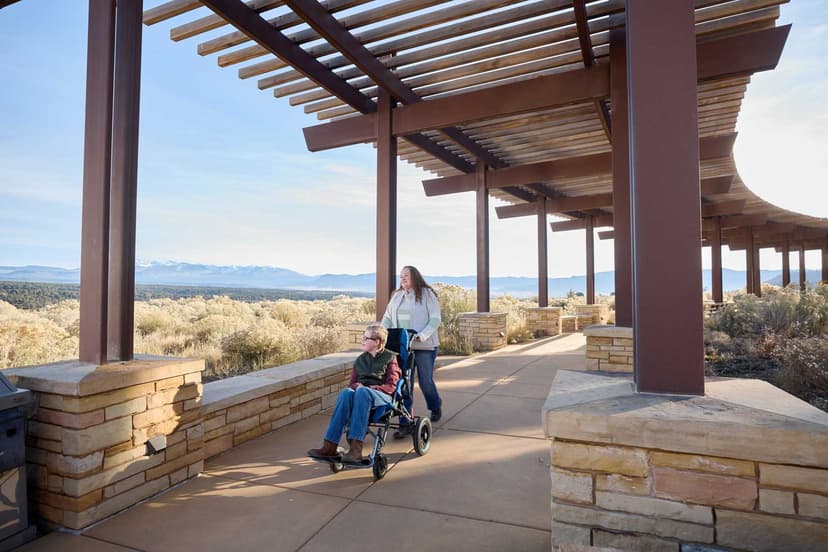
Access to the Hotel De Paris is available through the Lion's Gate at the east entrance of the hotel. The Hamill House has a ramp to provide ADA Accessibility to the first floor. The Energy Museum also has easy access for those with special needs.
This project is partially funded by a State Historical Fund grant award from the Colorado Historical Society.
Colorado's Historic Sites
Read More >>