During the 1820s and ’30s, traders along the Mountain Branch of the Santa Fe Trail came to view the crossing of Raton Pass as one of the most treacherous stretches of the voyage to Santa Fe. Long stretches without services and water prompted the need for a permanent settlement along the Purgatoire River. By 1861, the settlement of Trinidad was established, and over the years traders on the Santa Fe Trail, American Indians, coal miners and cattle barons would influence the town’s story. As a result of this diversity of people, few Western towns offer such a vast set of converging histories as Trinidad.
At the heart of these historic crossroads lies the Trinidad History Museum, where you can see the dichotomy between Victorian opulence and rugged Western realities. Three historic structures make up the Trinidad History Museum, each occupying its original location on one centralized block of Main Street.
Bloom Mansion
Beginning your tour, you can see the glorious Bloom Mansion—a crimson-colored Victorian house with green shutters that was once home to Frank Bloom, a wealthy cattle baron who helped shape Trinidad into a lasting community. Originally from Pennsylvania, Bloom joined his brothers-in-law in Pueblo before becoming the manager of a general store in Trinidad. In 1869, the local economy—including his store—still thrived on barter. From these kinds of transactions came the beginnings of Bloom’s cattle dynasty, which he built one cow at a time.
Santa Fe Trail Museum
From the lavishness of the Bloom Mansion to a modest adobe building housing the Santa Fe Trail Museum, you'll quickly encounter a whole different side of the West. The museum chronicles the trials, tribulations and realties of the storied Santa Fe Trail—a pathway of commerce that followed the Purgatoire River through the Southeastern Colorado plains to Trinidad, which was a convenient stop en route to Santa Fe, New Mexico. Among the detailed photographs and family heirlooms, you'll witness the durable buckskin coat worn by Kit Carson. Carson was a trapper and guide who became a popularized (and in many cases romanticized) figure of the American West because of the courage and shrewdness he was said to have demonstrated on the expeditions of John C. Frémont. Carson’s coat has a rough-around-the-edges appearance that underscores a far less glamorous existence than that of Frank Bloom.
Baca House
The final museum of the tour is the Baca House, a magnificent and well-preserved two-story home in the Greek-revival style. As a highly successful farmer, sheep rancher and landowner, Baca was a central figure to the founding and success of Trinidad. He donated a parcel of land for the construction of a Catholic church and, when he was elected to the territorial legislature in 1870, vehemently opposed Colorado’s statehood because he feared it would marginalize the territory’s Hispanic communities. Take a tour and let a guide teach you about the Baca family and the subsequent people who lived in the house. There is also a dedicated exhibit on the life of Arthur Roy Mitchell, a cowboy, artist, educator and preservationist who established the Santa Fe Trail Museum and lived in the Baca House as he gathered artifacts for the museum’s collection.
After touring the Bloom Mansion, Santa Fe Trail Museum and the Baca House, you can stroll through the museum campus’ historic gardens. Afterward, you can also purchase a booklet for a self-guided tour of El Corazón de Trinidad National Historic District, which is just steps away from the museum. Fifteen historic markers on the route mark significant places in the town’s history.
Scenic & Historic Ways to Get to Trinidad
Trinidad serves as the final destination (or starting point, depending on your viewpoint) on two of Colorado’s Scenic and Historic Byways.
The Santa Fe Trail route follows US 50 from the Kansas border to La Junta, and proceeds southwest to Trinidad on US 350 and US 160. This is roughly the route that travelers followed to get to Santa Fe in the mid-1800s, passing Bent’s Old Fort National Historic Site.
The other notable byway is the Highway of Legends, a route less traveled that crests a ridge between the hulking Spanish Peaks and the rugged Sangre de Cristos Mountains. You can stop off at the Cokedale National Historic District to photograph the surreal row of arches that harbored old coke ovens from when the area was mined for coal.
Did You Know?
Felipe Baca acquired his two-story house in 1873 by trading 22,000 pounds of wool—a telling tidbit that reveals the large role bartering had in the Western frontier marketplace.
Good to Know Before You Go
The Trinidad History Museum is a property of the Colorado Historical Society. Stop by the museum’s information center for brochures and info about the area's six other museums, the Santa Fe National Historic Trail, the Highway of Legends Scenic and Historic Byway, and more.
ADA Accessibility:
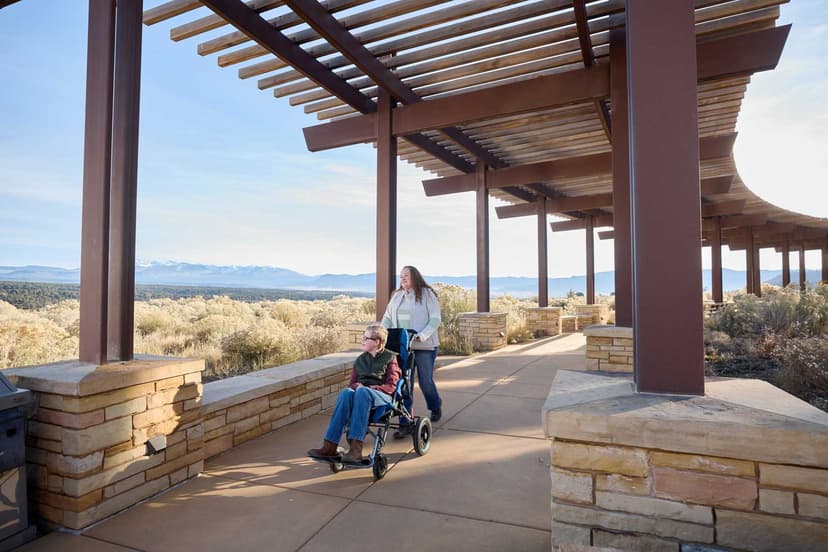
The Santa Fe Trail Museum, Museum Bookstore, and the Trinidad and Santa Fe Trail Information Center are accessible to those in wheelchairs.
312 E. Main St.
www.coloradohistory.org/hist_sites/trinidad/trinidad.htm
(719) 846-7217
May 1–Sept. 30:
Monday–Sunday, including holidays, 10 am–4 pm (last tour leaves at 4 pm)
October 1–April 30:
Santa Fe Trail Museum. Monday–Friday, 9 am–1 pm
The Baca House and Bloom Mansion are available Monday–Friday on a limited basis during these months (call for an update) and by reservations for groups of 12 or more people.
This project is partially funded by a State Historical Fund grant award from the Colorado Historical Society.
Colorado's Historic Sites
Read More >>