With 13 certified International Dark Sky Parks, one Urban Night Sky Place and nine communities across our four corners, the Centennial State is home to some of the best stargazing opportunities in the world. Connected by the Colorado Stargazing Trail™, these destinations offer access to incredible cosmic wonders, from astronomical events and star-lit stays to unique night time experiences. Let this trail serve as an inspirational starting point to build your own path to the stars and discover all of the ways Colorado’s dark skies will light up your vacation.
Colorado Stargazing Trail™
Stargazing Events
International Dark Sky Parks
When the sun slips out of sight, the real show begins. In Colorado’s designated International Dark Sky Parks, nightfall reveals a sky so crisp it feels infinite — where artificial light gives way to shooting stars and the Milky Way spills across the horizon. These aren’t just places that happen to be dark; they’re carefully protected landscapes, designed to shut out light pollution and let the cosmos shine.
Named for a steep-walled chasm with the Gunnison River winding through it, Black Canyon of the Gunnison National Park is a prehistoric marvel. Much of the 30,000-acre park is used for agricultural production, which cuts down on development that can contribute to light pollution. The two primary areas to visit are the North Rim and South Rim, which each have great viewing areas of the night sky. In addition to the AstroFest events each September, rangers offer astronomy programs in the summer. Check the calendar before you go or stop by the South Rim Visitor Center to get details.
Browns Canyon National Monument covers more than 20,000 acres of canyons and backcountry forests along the Arkansas River’s rushing whitewater. Gaze across the valley at the jagged peaks of the Sawatch Range, home to some of the highest peaks in the state. Ruby Mountain and Hecla Junction campgrounds, part of the Arkansas Headwaters Recreation Area, (accessible off of Hwy. 285 and available by reservation) provide excellent dark-sky viewing with shimmering reflections of the Milky Way over the river on moonless summer nights. Schedule your trip to align with summer stargazing programs sponsored by Friends of Browns Canyon to pair your experience with expert insights.
By day, Chimney Rock National Monument, located at the southern edge of the San Juan Mountains in southwest Colorado, is a breathtaking blend of nature and culture near Pagosa Springs. Amid the windswept forest, the archaeological ruins and ancient artifacts of the Chaco culture have remained largely unchanged for 1,000 years. By night, ancestral wisdom and modern telescopic technology meet — with unique Night Sky Archaeoastronomy Programs ideal for visitors of any age. During the 3.5-hour programs, visitors of all ages learn how the Chaco people used the stars for navigation, timekeeping and spiritual guidance.
Encompassing three reservoirs — Blue Mesa, Morrow Point and Crystal — and 42,000 acres of land, Curecanti National Recreation Area is known for water-based activities. But the mountains and mesas that surround the area protect visitors’ views of the dark sky, making it a top spot to spend the night under the stars at one of many campgrounds. At Elk Creek Campground’s amphitheater, park rangers lead evening programs during the summer on topics like star naming and the benefits of dark skies. There are also great viewpoints from the shores of Blue Mesa Reservoir and west of Blue Mesa Dam along Highway 92, which is open year-round.
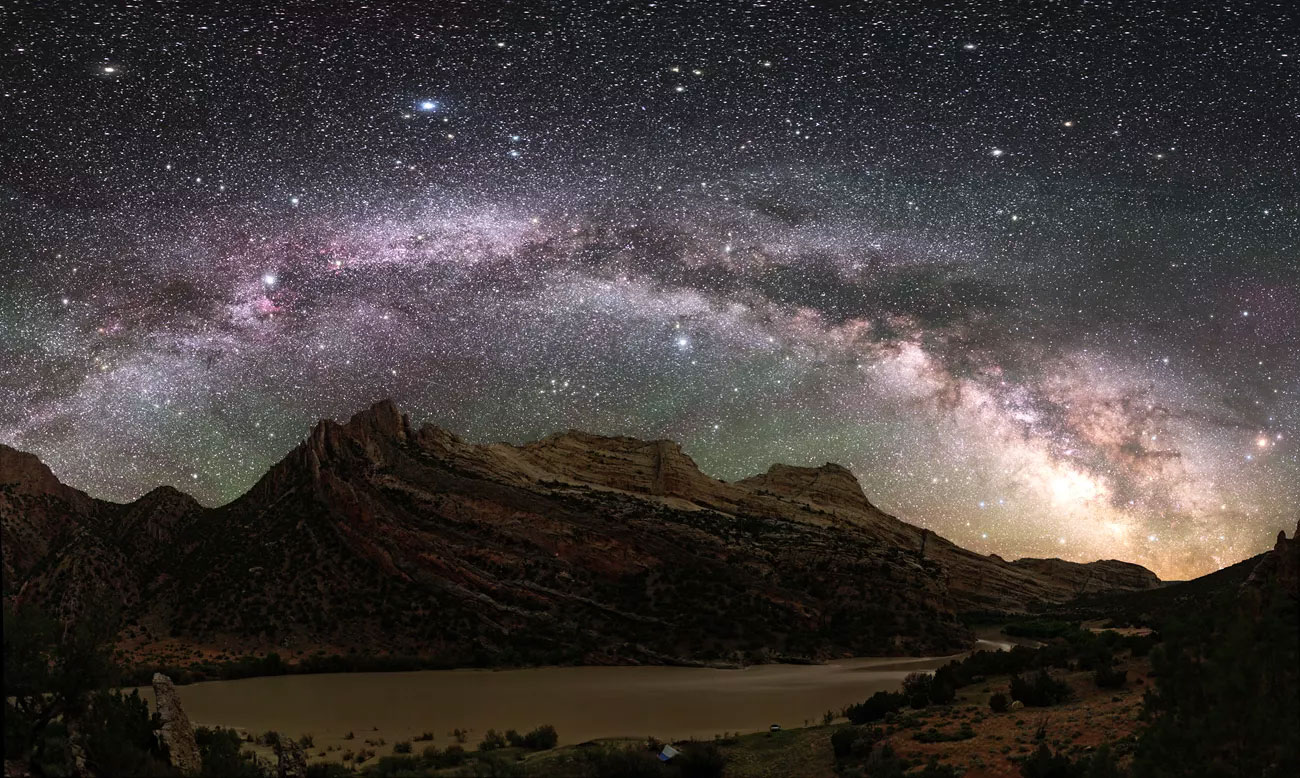
As the name suggests, dinosaurs once roamed under the same skies in this part of northwest Colorado that now draws paleontology enthusiasts to Dinosaur National Monument. Its remote location makes it one of the darkest places in the United States — in fact, you could even get the opportunity to see the International Space Station flying overhead. In the heart of the monument is Echo Park; make your way here to find Fremont petroglyphs and the massive Steamboat Rock formation looming over the Green River and Echo Park Campground. At night you’ll be treated to a spectacular display of stars above the dramatic scenery.
Florissant Fossil Beds National Monument is roughly an hour west of Colorado Springs. Despite this proximity to a large city, the Rocky Mountains create a screen for light pollution. During the day, explore some of the richest fossil deposits in the world. At night, head to the Hornbek Homestead area, which has a parking lot and is open 24 hours a day for an amazing look at celestial objects after regular park hours. Night Sky Programs are also held periodically in collaboration with the Colorado Springs Astronomical Society, which provide telescopes, laser-pointer tours and plenty of knowledge.
Despite its close proximity to the Denver metro area, Golden Gate Canyon State Park has become the state’s first Urban Night Sky Place. During the day, the park’s trails, fishing and scenic viewpoints draw visitor interest, while nighttime showcases sparkling wonders above. For extended access to the stars, book one of the park’s campsites or yurts.
Home to the tallest dunes on the continent, Great Sand Dunes National Park and Preserve is surrounded by a unique combination of forests, grassland, wetland and tundra. The shifting sands are popular for sand sledding and sandboarding, and also boast open views of the night sky over the otherworldly landscape. If you visit when the moon is bright you won’t see as many stars, but the eerie light illuminates the dunefield in a way that might make you feel like you’re on the moon itself. Learn about the wonders of the universe and the park’s nocturnal ecology during evening programs in the summer and fall.
Shielded by rugged canyon walls, the Gunnison Gorge National Conservation Area (NCA) has some of the darkest skies in the world. Trek along the Ute Trail into the gorge, where secluded riverside campsites create an unforgettable backdrop for stargazing. Simply look up to claim your journey’s reward — unhindered views of the galaxy, glowing planets and crisp constellations. Car campers can also settle in at Cottonwood Grove Campground or Peach Valley Staging Area for access to restrooms and fire rings. You can even plan your trip around a stargazing event, where experts set up telescopes and teach visitors all about outer space.
Spanning both sides of the state line between Colorado and Utah, Hovenweep National Monument was the 17th certified International Dark Sky Park in the world. Established to protect prehistoric structures built by the Ancestral Puebloans, its features include a series of stone towers, dwellings and kivas (ceremonial structures). One theory is that some of the towers and rock-art panels were meant to mark major celestial events or used as observatories. You can witness the primordial sky from the visitor center parking lot and the campground, or check the calendar for stargazing programs in the spring and summer.
Jackson Lake is Colorado’s first state park to earn International Dark Sky Park certification. Known as “an oasis of the plains,” activities tend to center around the water — including boating, fishing, water skiing and swimming — but it’s also popular with wildlife watchers who come to see migratory birds and resident animals like white-tailed deer, red fox and jackrabbits. Jackson Lake puts on many educational events and hikes, so visitors can use the telescope in the park to view the sky and learn. Most events and programs are held May–August and can be found on the park’s website.
Located at the bottom of the Slumgullion Earthflow, the 700-year-old remnants of a massive landslide, Lake Fork Earth & Sky Center features a 2-mile trail network. The remote location lends itself to viewing planets, constellations and even meteors during clear conditions. A weekly summer stargazing program is hosted every Wednesday night at Windy Point Observation Site, which is at an elevation of more than 11,000 feet. The Lake City Star Fest also takes place each June, involving star parties, solar telescope viewing, photography lessons and more.
This UNESCO World Heritage Site is famed for its nearly 5,000 ancestral sites. Through traditional knowledge from the 27 Pueblos and Tribes with sacred connections to Mesa Verde National Park and archaeological studies, it’s clear ancestral people were conscious of the movement of astronomical bodies. The best places to view dark skies in Mesa Verde are Morefield Campground, where high canyon walls block a great deal of ambient light, and Park Point, the area of highest elevation in the park that is isolated from any nearby light fixtures. Evening ranger programs are held at the Morefield Campground amphitheater, generally from Memorial Day weekend to Labor Day weekend.
With 175 acres, Top of the Pines (TOP) is a recreation area that offers hiking, mountain biking, disc golf, camping and nordic skiing at the foot of the Sneffels Range. Far removed from urban light pollution, TOP’s pristine night sky is among the darkest in Colorado — confirmed by a sky-brightness measurement program. From the elevation of 8,650 feet, bask in the starry heavens among towering ponderosa pines and snowcapped mountains. April through November is the best time of year for comfortable stargazing, when the area is typically free of snow cover. However, moonlight ski and snowshoe tours are popular in the winter.
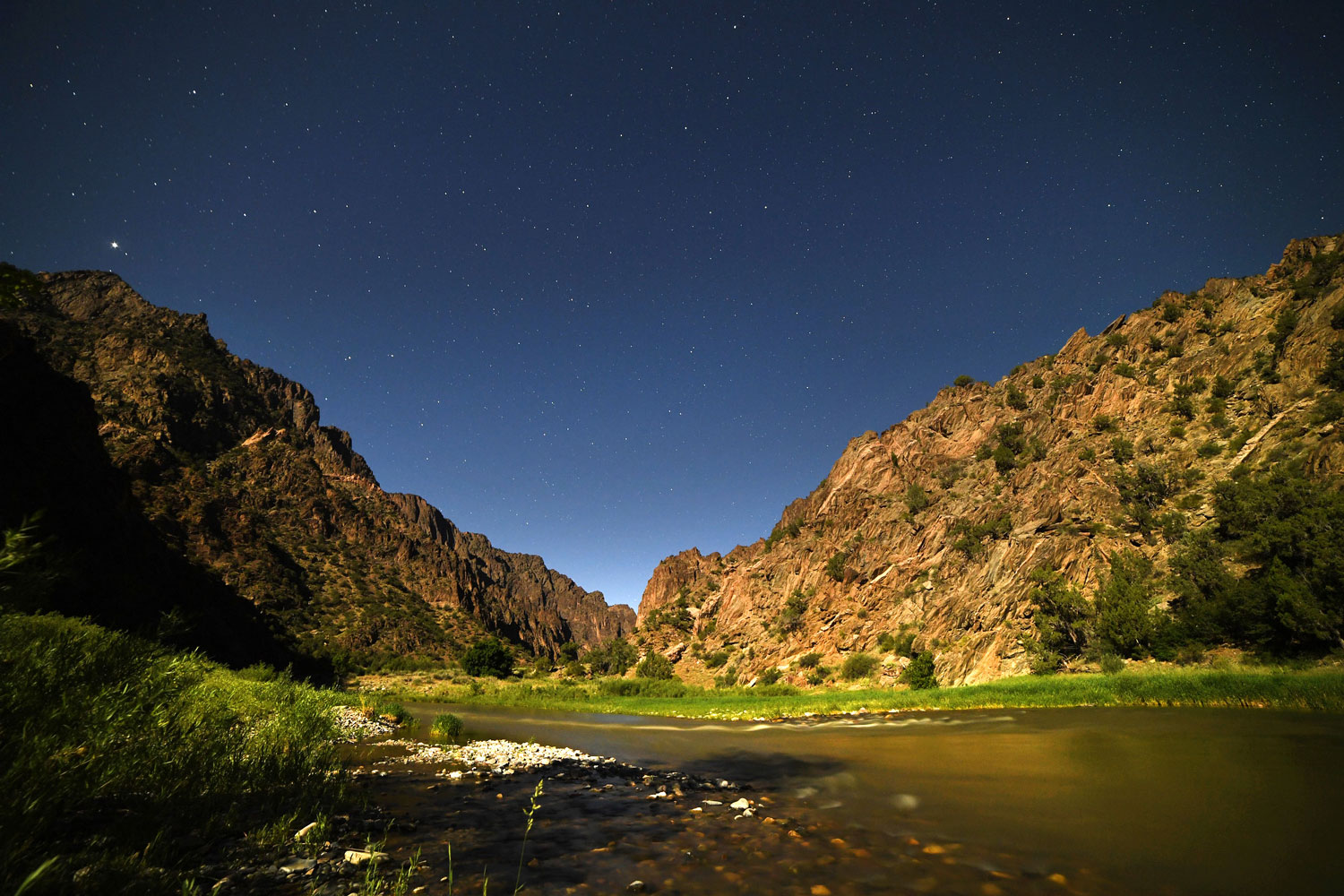
The night sky in Black Canyon of the Gunnison National Park
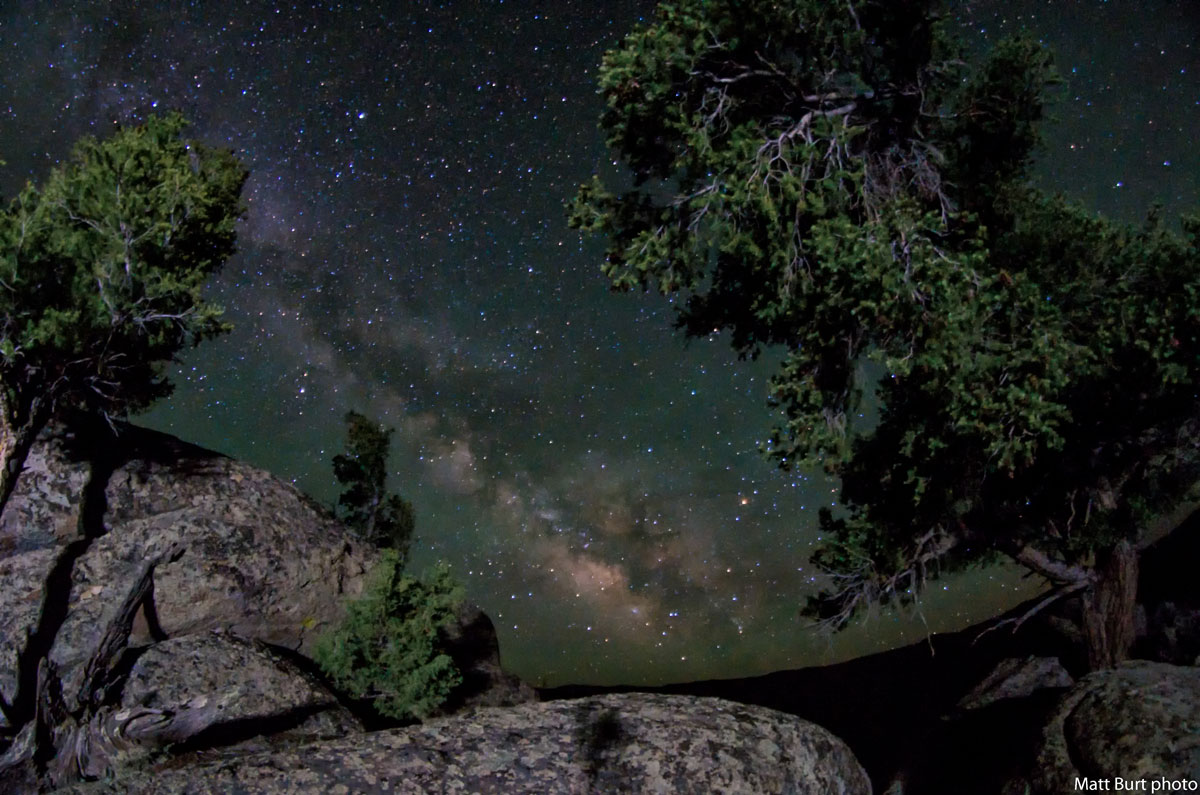
The Milky Way in Gunnison
The Milky Way in Dinosaur National Monument
Courtesy of NPS/Dan Duriscoe

Milky Way over the Great Sand Dunes
NPS/Patrick Myers
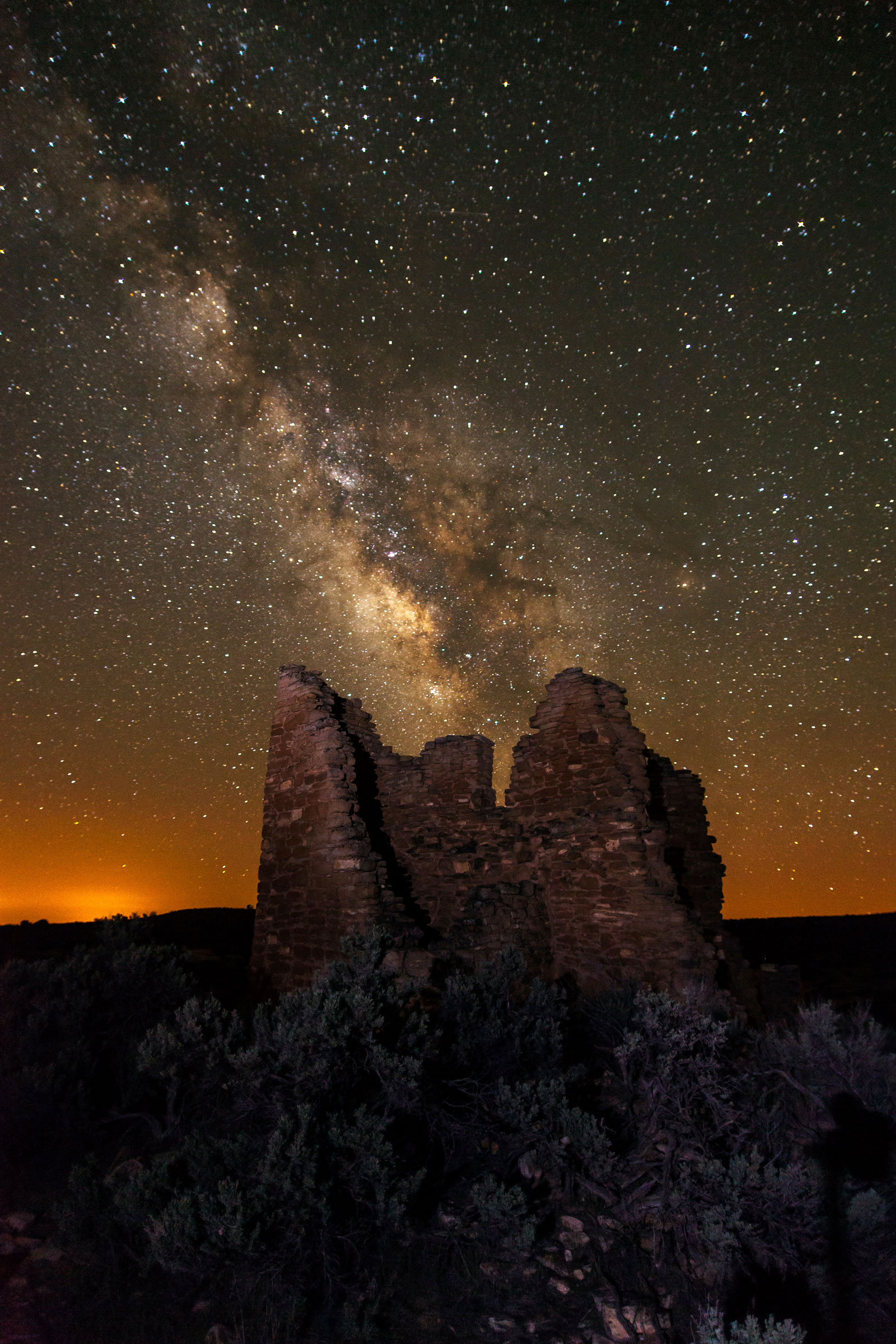
The Milky Way over Hovenweep National Monument
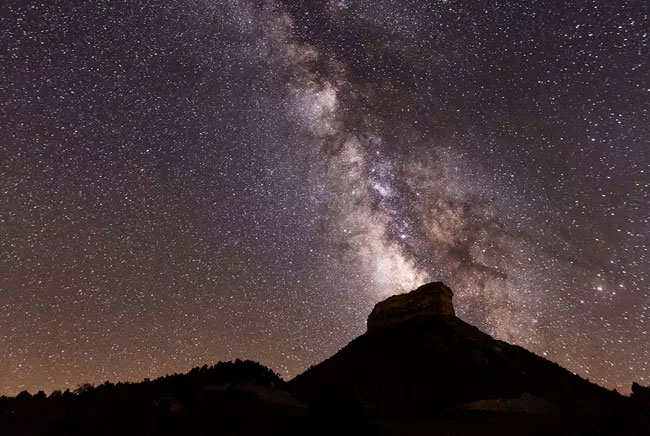
Stargazing in Mesa Verde National Park
Courtesy of NPS/Jacob W Frank
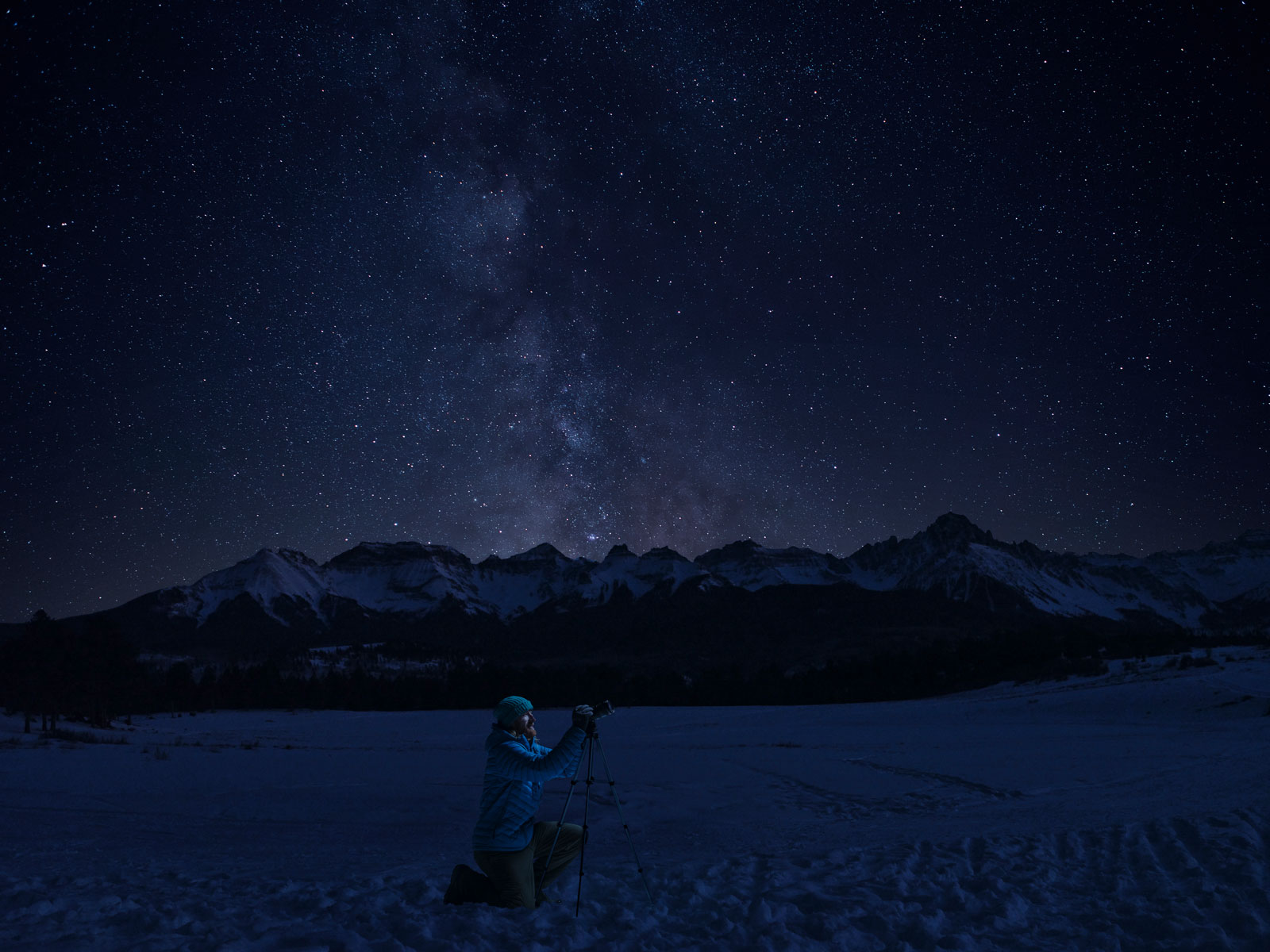
Top of the Pines in Ouray County
International Dark Sky Communities
In Colorado’s certified International Dark Sky Communities, nighttime is something worth protecting. Here, streetlights are thoughtfully dimmed so constellations can emerge with startling clarity. This rare designation is earned through smart lighting policies and a shared commitment to preserving wildlife, supporting healthy sleep and ensuring the simple wonder of living in rhythm with the natural night endures.
Cradled by the Tenmile Range, Breckenridge is Colorado’s first International Dark Sky Certified Ski Resort Town. Surrounded by towering 14,000-foot peaks, the community has meticulously managed its lighting for decades to ensure the Milky Way remains a vibrant fixture above its historical Main Street. For the most expansive views, locals recommend heading to Boreas Pass, Sawmill Reservoir or Gold Run Nordic Center, while the Breckenridge Welcome Center provides expert guidance on the best seasonal spots to experience the town's celestial splendor.
Tucked into the base of the Sangre de Cristo Mountains north of the Great Sand Dunes, Crestone is a small village known as a spiritual center for many of the world’s major religions. A decades-long commitment to sustainable living and environmental preservation includes defending its dark skies through responsible lighting. You can soak up the splendor of the area’s natural beauty via camping, hiking, fishing and rock climbing. Dark Sky Crestone hosts periodic community events that have ranged from stargazing parties with musical performances to street festivals. The town has a map and directions for the best dark-sky viewing sites around Crestone.
Situated in the Rockies Playground, this mountain town attracts visitors for its close proximity to world-class recreation opportunities and clear night skies. Surrounded on three sides by federal open space lands, there’s plenty of opportunity to admire the celestial wonders above. For easy access, Frisco includes multiple local parks that are also great for stargazing, including the Frisco Bay Marina, Walter Byron Park and the Frisco Adventure Park.
A location on a 7,000-foot mesa makes wide night-sky vistas possible from Norwood all year. The high-desert climate and very dry conditions contribute to frequently clear skies, whether the temperatures are warm or cold. The surrounding Uncompahgre National Forest and BLM lands provide excellent darkness. Some of the best places for viewing are close to developed and dispersed camping, including Miramonte Reservoir, Busted Arm Draw and the Thunder Road trail system. You can also pick up a pizza from Dark Sky Café and take it on a sky-viewing picnic. To find events throughout the year, check the Norwood Colorado Dark Sky Advocates Facebook page.
A pair of small towns in western Colorado with a closely intertwined history, Nucla and Naturita have worked together to reduce the effects of light pollution. Set amid an expansive rural landscape punctuated by dramatic red-rock formations, the area became known for a boom in copper and uranium mining in the early 1900s. Today, visitors are drawn to the opportunities for camping, fishing, hiking, hunting, mountain biking and, of course, stargazing. Stop by the visitor center in Naturita to get info on trails, campsites and more. To enhance your star-viewing experience, plan your trip during the new moon and astronomical twilight.
Tucked into the Roaring Fork Valley and surrounded by wide-open ranchlands and mountain silhouettes, Old Snowmass invites visitors to slow down after sunset and look up. The community earned its designation for preserving natural darkness through thoughtful lighting practices and public stewardship, resulting in remarkably clear skies. For some of the clearest stargazing in the area, find a quiet spot along Watson Divide Road or Capitol Creek Road and delight in the splendor of thousands of shining stars overhead.
Paonia is cradled within the West Elk Mountains, where the towering peaks create perfect conditions for orchards and sprawling vineyards. These same summits also act as a natural barrier to light pollution, ensuring crystal-clear dark nights. Make your way there by taking the West Elk Loop scenic and historic byway, which cruises through landmarks like the Redstone Coke Ovens, Black Canyon of the Gunnison and Morrow Point Reservoir. Plan your trip around a dark-sky event, where local experts explain constellations, astrophotography and the importance of protecting the night. Or simply reserve a campsite by the reservoir at Paonia State Park, lay out a blanket and start your stargazing.
These are two of the highest-altitude International Dark Sky Communities in the world. Take in heavenly wonders from Bluff and Summit Park or the Smokey Jack Observatory, which has one of the most powerful telescopes in Colorado and hosts star parties in the summer. Other excellent places are the Alvarado and Hermit Lake trailheads in the nearby Sangre de Cristo Mountains. Dark Skies of the Wet Mountain Valley has free public star parties, telescope workshops and educational speakers. Don’t miss the Planet Walk, a true-to-scale interpretive walk through the solar system between the two towns and beyond.
You’ll find Ridgway in the foothills of the San Juan Mountains in southwest Colorado — a remote setting that produces very little light pollution. Because Ridgway’s residents have long embraced protecting the natural surroundings, it’s no surprise the town has passed ordinances for outdoor lighting and produced educational campaigns. Look up during summer from the downtown area and the Milky Way is often visible to the naked eye. You can get great views from any yard or balcony in town, and local astronomers also recommend Ridgway Athletic Park’s fields. Time your visit to coincide with a meteor shower, including the Perseids each August or the Geminids in December.
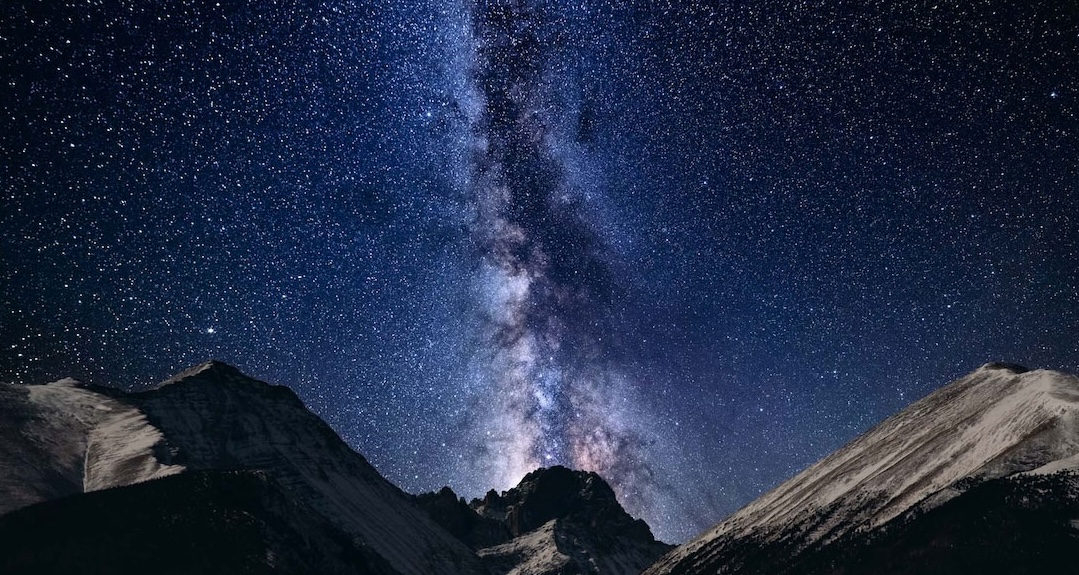
The Milky Way over the Crestone Needles
Scott Dankof Photography
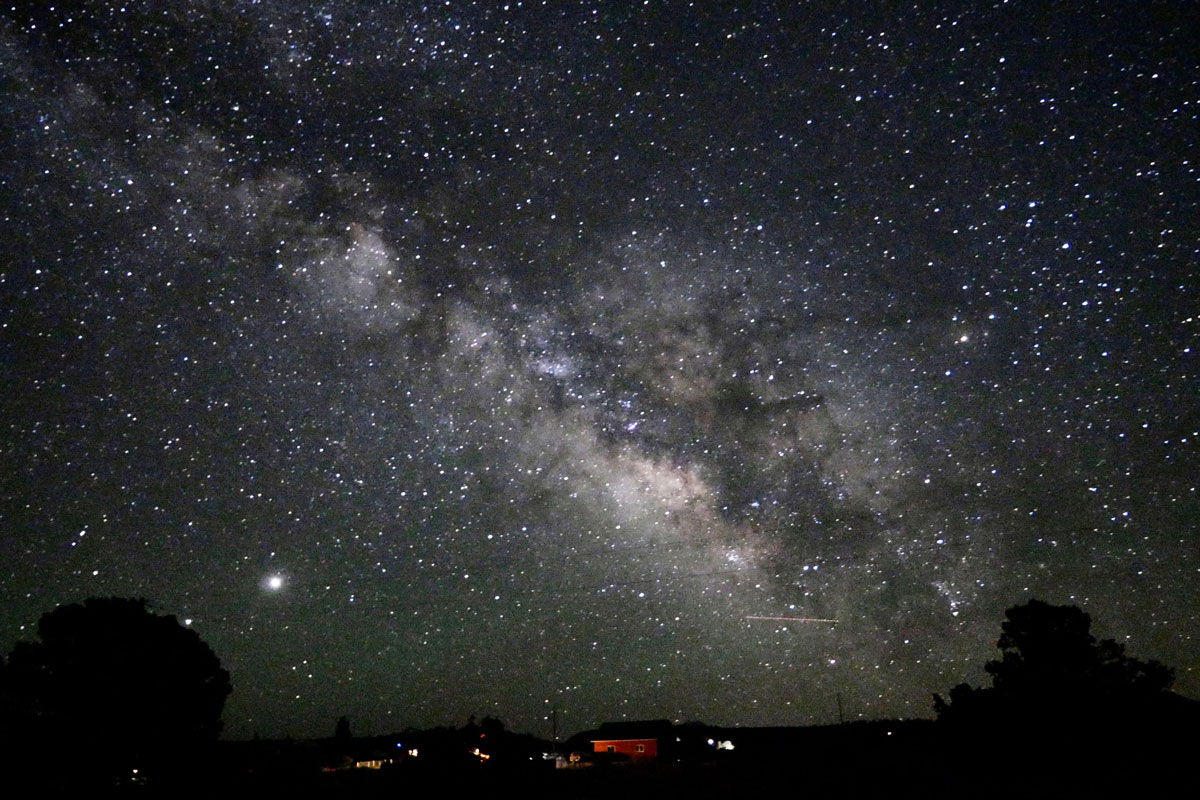
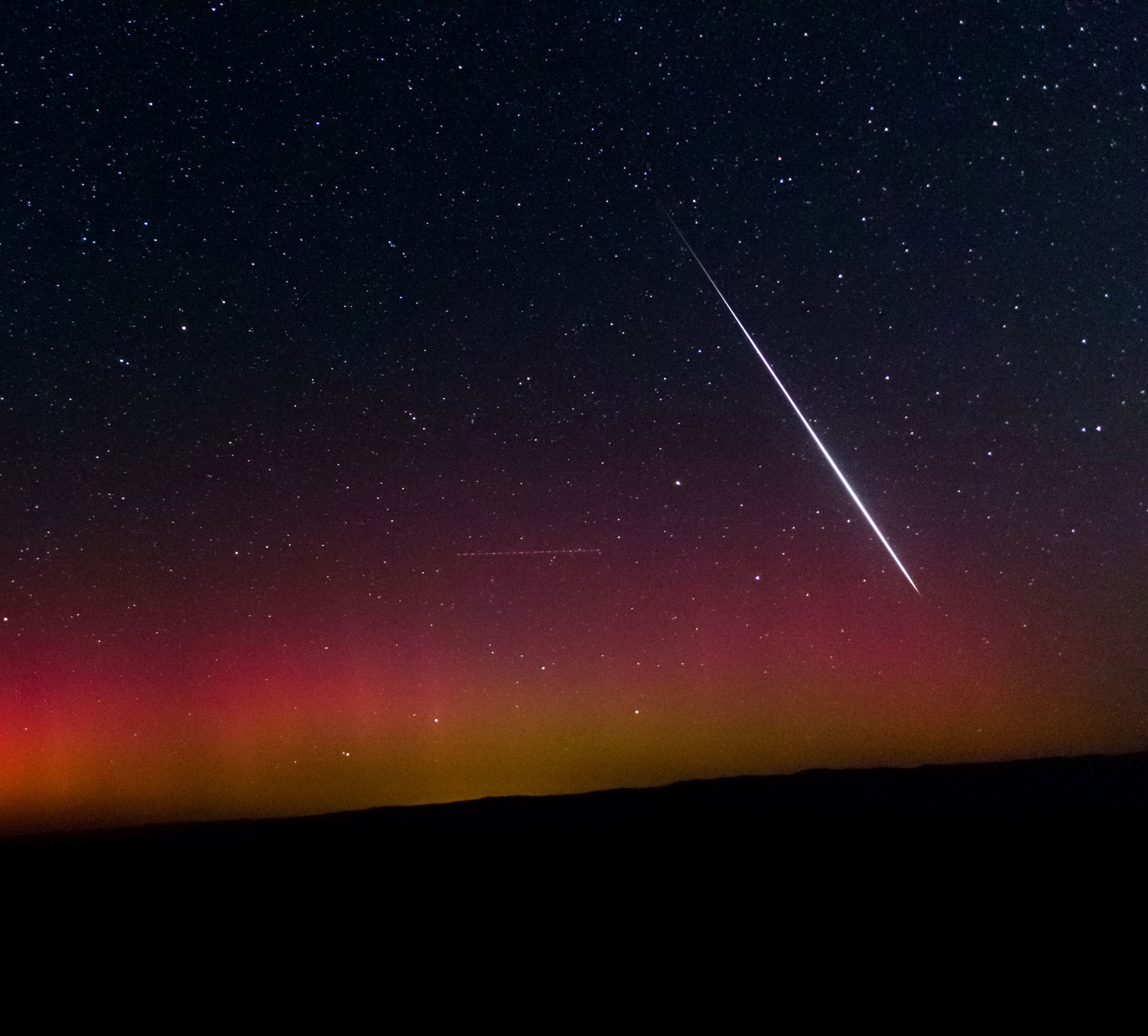
Stars over Nucla, Naturita and Norwood
Nola Svoboda
Night sky in Nucla, Naturita & Norwood
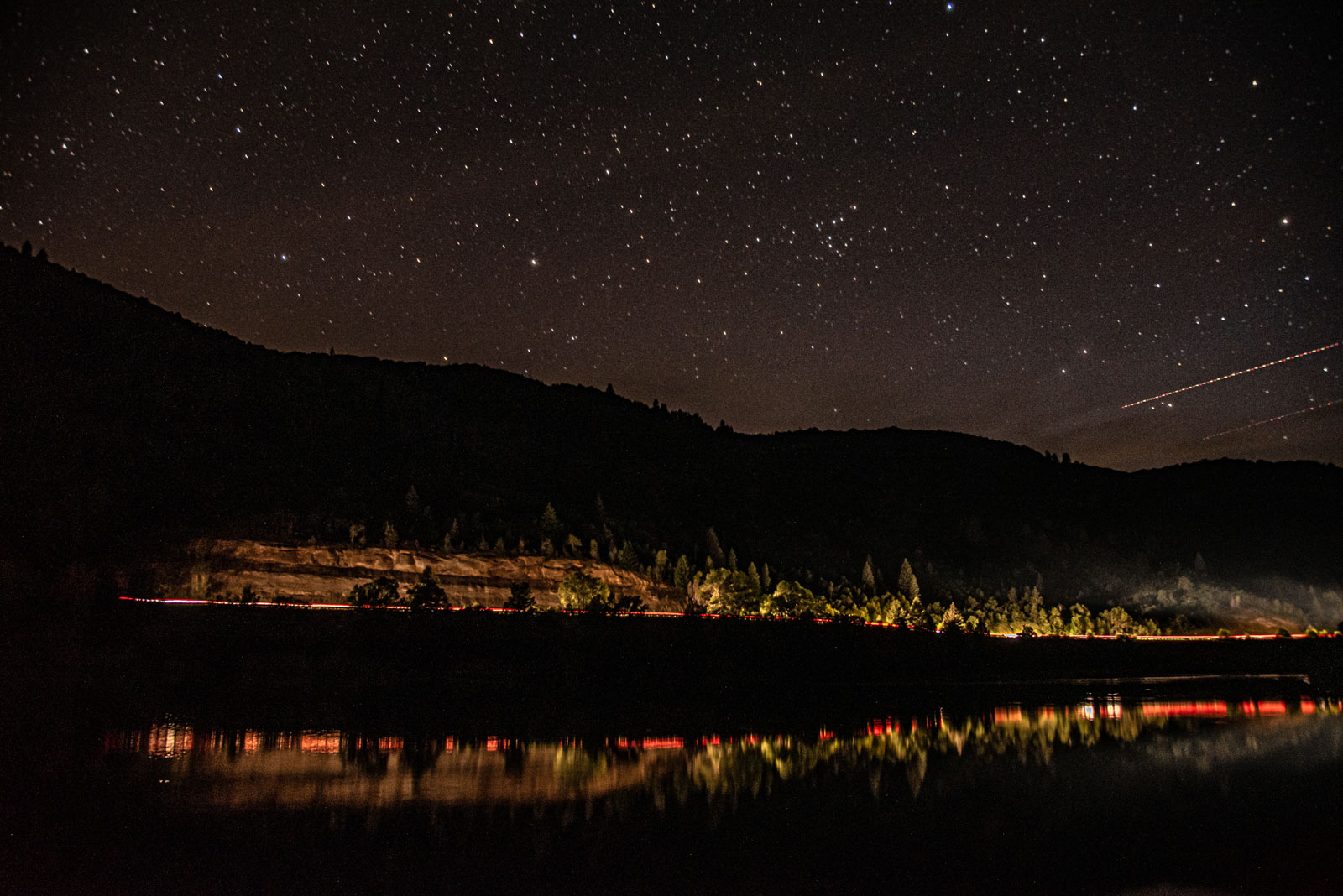
A starry sky in Paonia State Park
Courtesy of Colorado Parks & Wildlife/D. Doskocil
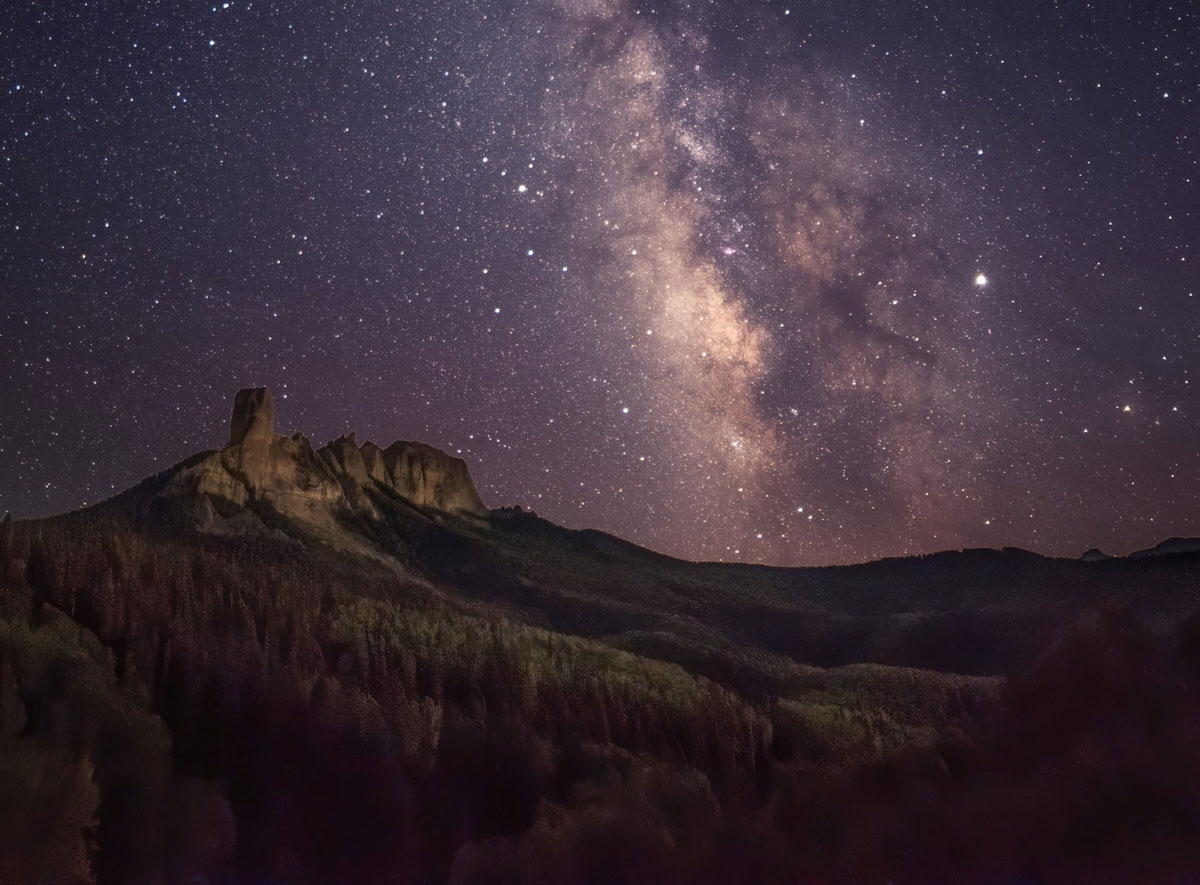
Milky Way in Ridgway
Courtesy of Gary Ratcliff
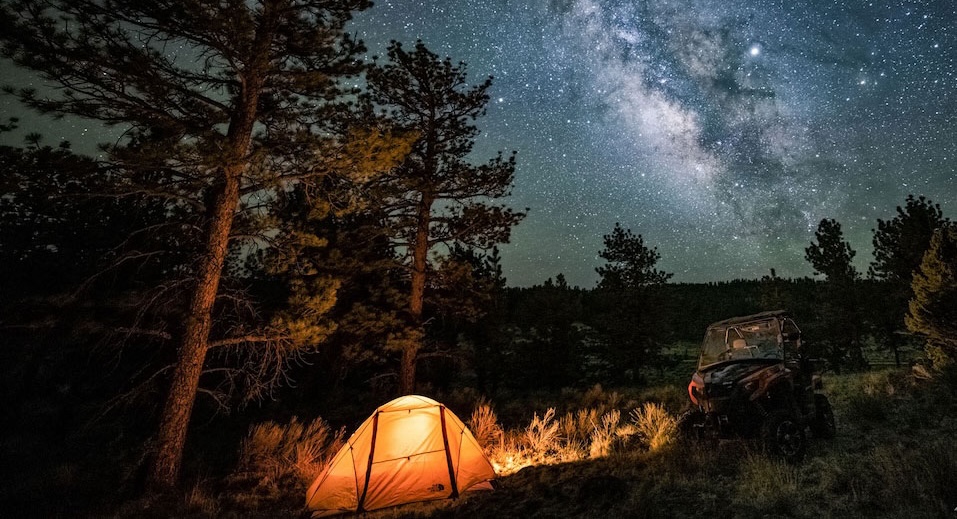
Camping in the Wet Mountain Valley
Scott Dankof Photography
Colorado Stargazing Businesses